The Short Answer: Yes, But There Are Important Rules
Can a sink drain go straight down? Yes — a sink drain can run vertically straight down, but only under specific conditions that comply with Australian plumbing standards. The configuration must still include a proper trap, adequate venting, and correct pipe sizing. Getting any of these elements wrong can lead to foul odours, slow drainage, or costly compliance issues down the track.
Why Drain Direction Matters in Victorian Homes
Victorian homes come in all shapes and sizes — from heritage weatherboards in country towns to modern townhouses on the urban fringe. The direction your sink drain takes isn’t just a matter of convenience; it directly affects how well wastewater flows, whether sewer gases enter your home, and whether your plumbing passes a compliance inspection.
When you’re renovating a kitchen or bathroom, it’s tempting to assume that pointing a drain straight down is the simplest solution. In many cases it is — but the pipework behind the wall or beneath the floor still needs to meet the requirements set out in the AS/NZS 3500 Plumbing and Drainage Standard, which governs all plumbing work in Victoria.
Understanding the Trap: The Most Critical Component
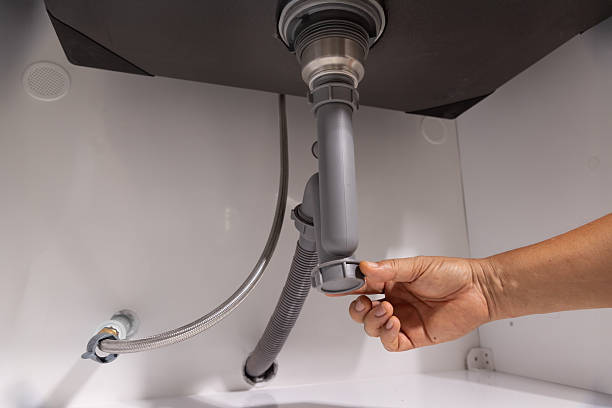
Whether your drain goes straight down, at an angle, or horizontally through a wall, every sink must have a P-trap or bottle trap installed. This curved section of pipe holds a small amount of water at all times, creating a seal that prevents sewer gases from rising back up through your sink.
If a sink drain goes straight down without a proper trap, you’ll likely notice a persistent sulphur or rotten egg smell in your kitchen or bathroom. This isn’t just unpleasant — it can be a genuine health hazard. Always confirm a trap is in place before signing off on any drainage work.
Can a Sink Drain Go Straight Down Into the Floor?
This is one of the most common questions during kitchen and bathroom renovations. The answer is yes, provided the following conditions are met:
- A correctly sized trap (typically 40mm for a hand basin, 50mm for a kitchen sink) is installed at the drain outlet.
- The vertical drop connects to a horizontal drain with the correct fall — generally a minimum grade of 1:40 under AS/NZS 3500.
- The drain is properly vented to prevent siphoning of the trap seal.
- All pipework is supported and secured to prevent movement or sagging over time.
- The installation is carried out or inspected by a licensed plumber in Victoria.
If your sink sits on a vanity or kitchen cabinet directly over a floor waste or a floor-penetrating drain, a straight-down configuration can be very neat and efficient. It’s a popular choice in modern bathroom renovations where concealing pipework inside cabinetry is a priority.
When a Straight-Down Drain Causes Problems
Even though a vertical drain is allowed, there are scenarios where it creates headaches. One common issue is trap siphoning — where the force of water rushing straight down pulls the water out of the trap, breaking the seal and allowing gases to enter. This is why correct venting is non-negotiable.
Another problem arises in older Victorian homes where the subfloor space is limited or the existing drain stack is in an awkward position. Forcing a straight-down configuration in these situations can result in sharp bends, inadequate fall, or connections that don’t comply with current standards. If you’re working with a heritage property or an older slab-on-ground home, the existing drainage layout may need assessment before you commit to a design.
You should also think carefully about access for future maintenance. A drain that disappears straight into a concrete slab with no accessible cleanout point can make clearing a blockage significantly more difficult and expensive. For more detail on how drainage systems are designed and installed, take a look at our drain installation services page.
Renovation Plumbing: Planning Your Drain Layout Early
The best time to think about your drain direction is before you start pulling out tiles or ordering new fixtures. During a renovation, your plumber can assess the existing drainage layout, identify the location of the drain stack, and recommend whether a straight-down, through-the-wall, or hybrid configuration suits your space best.
Good planning also saves money. Changing a drain direction after concrete has been poured or walls have been tiled is expensive and disruptive. If you’re renovating a kitchen or bathroom in regional Victoria, our renovation plumbing team can help you map out a compliant, practical drainage solution from the start.
It’s also worth noting that in Victoria, any work that involves connecting to or altering a sanitary drainage system must be carried out by a licensed plumber. This is governed by the Plumbing and Drainage Act 2000 (Vic) and enforced by the Victorian Building Authority. DIY drainage work is not only risky — it’s illegal.
When to Call a Professional
You should call a licensed plumber any time you’re planning to install, move, or alter a sink drain — whether it goes straight down, through a wall, or in any other direction. This is especially important during renovations, where changes to drainage can affect the entire sanitary system in your home.
If you’re already experiencing slow drainage, gurgling sounds, or sewer odours near your sink, these are signs that your current drain configuration may not be working correctly. Don’t wait for the problem to worsen. The team at Blu-Stream Plumbing services Victoria and surrounding regions — get in touch today for expert advice and a compliant drainage solution tailored to your home.
Conclusion
So, can a sink drain go straight down? Absolutely — when it’s done correctly. The key requirements are a properly installed trap, adequate venting, correct pipe fall, and compliance with AS/NZS 3500. These aren’t just bureaucratic hurdles; they’re the difference between a drainage system that works reliably for decades and one that causes ongoing problems.
Whether you’re renovating a bathroom, updating a kitchen, or building from scratch, getting your drain layout right from day one is always the smarter move. Blu-Stream Plumbing has the local knowledge and licensed expertise to make sure your drainage is done properly — the first time. Reach out to our team to get started on your next project.
Frequently Asked Questions
Does a sink drain have to have a trap if it goes straight down?
Yes, absolutely. Every sink drain in Australia must include a trap — typically a P-trap or bottle trap — regardless of whether the drain runs vertically, horizontally, or at an angle. The trap holds water to block sewer gases from entering your home and is a mandatory requirement under AS/NZS 3500.
Can I install a straight-down sink drain myself in Victoria?
No. In Victoria, any work involving sanitary drainage — including installing or relocating a sink drain — must be carried out by a licensed plumber. This is a legal requirement under the Plumbing and Drainage Act 2000 (Vic). Unlicensed drainage work can result in fines, failed inspections, and costly repairs.
What pipe size do I need for a sink drain that goes straight down?
For a standard kitchen sink, a 50mm diameter pipe is typically required. For a hand basin, 40mm is generally sufficient. Your licensed plumber will confirm the correct sizing based on your specific fixture and the requirements of AS/NZS 3500, ensuring proper flow and compliance.
Will a straight-down drain cause gurgling or slow drainage?
It can, if the system isn’t correctly vented. Without adequate venting, the pressure created by water rushing straight down can siphon the trap seal, leading to gurgling noises and sewer odours. A properly designed and vented drain system will eliminate these issues entirely. For more about what we do, visit our homepage.